How a Time Study Can Show You What to Automate
Have you ever tried to automate something like a weekly report, spent 10 to 20 hours working on it, only to save 30 minutes per week? At that rate, you don’t recoup your hours until 20 to 40 weeks in.
You too, huh? Well, that oddly specific story was me, and this could have been avoided had I started with a time study.
What is a time study and how do I do it?
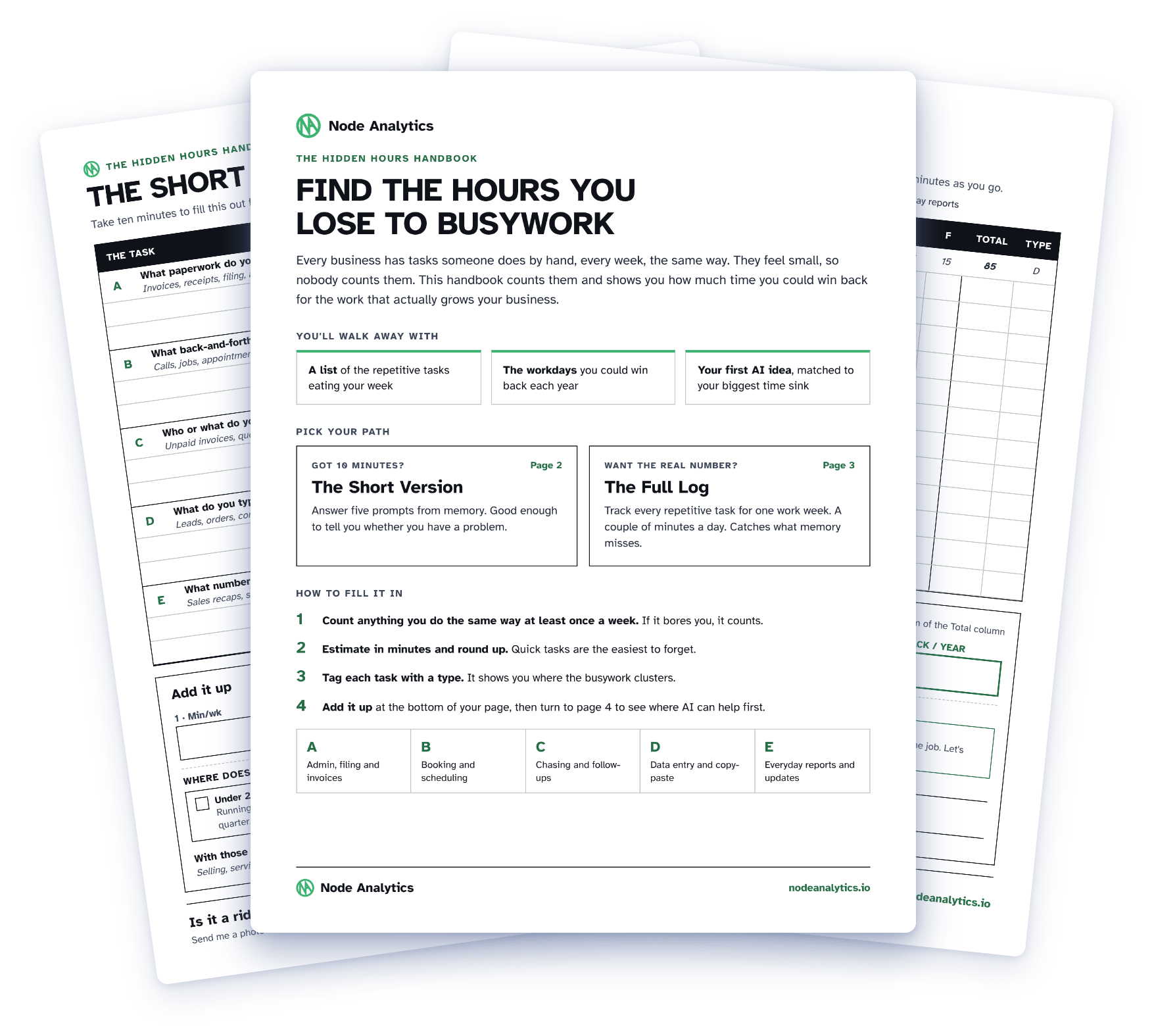
A time study is just a log of how you spend your time. Simple, right? To help find what to automate, track any time you spend working on something repetitive. Things like invoices, receipt and expense tracking, email inbox triage, etc.
Write down:
- What the task is
- Who is involved
- What tools it requires
- How long you spend on it
- How often you do it
Don’t stress over the tracking; just ballpark it and don’t be scared to round up. The hidden cost of switching between tasks is real, and it takes a while to get back into the flow. Get other people on your team to do it as well. You might even find out that multiple people on your team are spending time on the same exact task.
Do this for a week and you’ll walk away with a good idea of where you are losing time. If that sounds like a lot, look, I get it. Not everyone has time to literally log everything. It’s not as good, but you can sit down at the end of the week while everything is fresh and write down everything you did during the week in one sitting.
Why do a time study before automating?
Doing a time study is going to get you the most bang for your buck. You’ll learn exactly where your time goes, and what automations to start with based on that.
Once you collect all the logs, multiply how long you spend and how often you do it. Sort it by the totals and you’ll end up with a list of processes to automate, and you’ll know how much time you will save if you automate them. You can even combine related tasks into a larger automation to increase the time you save.
So what happened to that weekly report?
Luckily, we were able to widen the scope to include not just the report, but also a deeper analysis that investigated what drove changes in the weekly numbers. Overall, we were able to increase the time saved from 30 minutes to 5 hours a week AND deliver it earlier in the morning than if it was prepared manually. If I had to do it again, I would start with the time study to better understand the impact of the project and to widen the scope from the get-go.